
Cooper had his first ear infection when he was four years old. Then another one at five. Then two in one year when he was seven. By the time he was ten, we were at the vet for ear infections so regularly that I started budgeting for them like a utility bill — roughly $350–$450 per visit once you factor in the culture, the prescription drops, and whatever the ear had progressed to by the time I noticed.
The maddening thing? The vet finally sat me down after about the sixth infection and showed me how to actually clean Cooper’s ears. The technique I’d been using — or mostly not using, if I’m honest — was completely wrong. I’d been too timid. I was afraid of hurting him. So I’d do a quick wipe of the outer ear and call it done. That’s not ear cleaning. That’s just theater.
Here’s what I actually learned, and what I’m doing with Birch from day one.
Why Dog Ear Infections Keep Coming Back
Dogs — especially floppy-eared breeds like Labs, Cocker Spaniels, and Basset Hounds — have ear canals that trap moisture, debris, and wax in a way that human ears don’t. The canine ear canal is L-shaped, meaning gunk can accumulate down in the vertical canal where you can’t see it. That warm, moist, debris-filled environment is paradise for yeast and bacteria.
Cooper’s ear infections were almost always yeast-based, which his vet said is extremely common. The culprit was usually swimming or bath time where water got trapped, combined with my inadequate cleaning routine afterward. Every time the infection “cleared up,” there was still residual buildup that let the yeast rebound within a few weeks.
The solution wasn’t more antibiotics. It was better maintenance.
What You Actually Need
You don’t need a lot of products. You need the right ones and you need to use them correctly.
An ear cleaning solution: After trying several options, our vet recommended Virbac Epi-Otic Advanced Ear Cleanser. It’s a gentle, non-ototoxic formula (meaning it won’t damage the ear if it reaches the eardrum), has a low pH that discourages yeast growth, and dries thoroughly. A lot of over-the-counter ear cleaners I’d bought at the pet store were basically glorified alcohol — they dried things out but didn’t address the underlying environment.
Cotton balls or gauze pads: Regular cotton balls work fine. Don’t use Q-tips in the ear canal — you can pack debris further down and potentially rupture the eardrum. Cotton balls are for wiping the visible outer canal, not probing.
That’s it. You don’t need ear powder, ear wipes, fancy applicators, or a dozen different products. Keep it simple.
The Correct Technique (The One I Should Have Been Using for Years)
This is what my vet demonstrated on Cooper, and what I now do with Birch every two weeks — more frequently after swimming or baths.
- Lift the ear flap and look inside. If you see dark brown/black discharge, strong odor, or the dog is shaking their head and scratching — stop and see a vet first. Don’t clean an already-infected ear without knowing what you’re dealing with. Some infections require specific prescription drops and cleaning can spread the infection.
- Squeeze the ear cleaner generously into the ear canal. More than you think. You want to actually flood the canal a bit so the solution reaches down into the vertical portion of the L-shape.
- Hold the ear flap down and massage the base of the ear for 30–60 seconds. You should hear a squishing sound. This is the solution loosening debris in the canal. Cooper used to lean into this — it clearly felt good.
- Let the dog shake. Step back. This is how the loosened debris and solution come out of the canal. It’s wet and gross, but it’s doing the work.
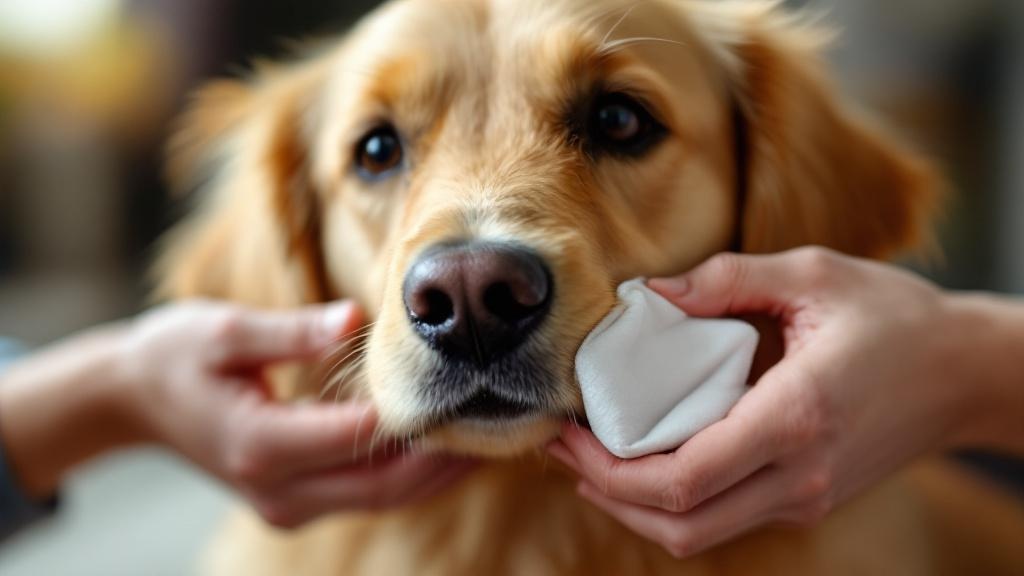
- Wipe out the outer ear with cotton balls. You’re removing what the shake brought up. Don’t dig around — just clean what you can see.
- Repeat if the cotton comes out very dark or dirty. A second flush is sometimes needed.
How Often Should You Clean?
For most dogs with healthy ears: once every two to four weeks. For dogs that swim or get frequent baths: within an hour of the water exposure, every time. For dogs with a history of chronic infections like Cooper had: your vet may recommend weekly.
Birch gets her ears cleaned every two weeks as part of a grooming routine. She’s a mixed breed with semi-erect ears that don’t trap moisture as aggressively as Cooper’s Lab ears did, but I’m not taking any chances. The habit matters more than the necessity right now.
Warning Signs That Mean Vet, Not Cleaning
Cleaning is maintenance. It’s not treatment. If you see any of the following, skip the cleaning and call your vet:
- Strong, unpleasant odor (yeasty/musty or foul)
- Discharge that’s dark brown, black, or yellow/green
- Redness or swelling inside the ear
- Dog crying or pulling away when you touch the ear
- Head shaking that won’t stop or tilting the head to one side
- Visible scratching at the ear with hind paw
These symptoms mean infection, and you need a culture to know whether it’s bacterial or yeast — because the treatments are different. Dumping cleaner in an active infection can make things worse.
What I’d Tell Cooper-Era Me
Don’t be afraid to get in there. Dogs’ ear canals are tougher than you think, and being too gentle is what let debris accumulate in Cooper’s ears for weeks between half-hearted wipes. The Epi-Otic, used correctly and consistently, cut Cooper’s infections from multiple per year down to zero in the last two years of his life — once I finally learned what I was doing.
Birch has had zero ear infections. She’s 14 months old. I’m counting it as a win — and I’m not stopping the routine.
Related reading: