
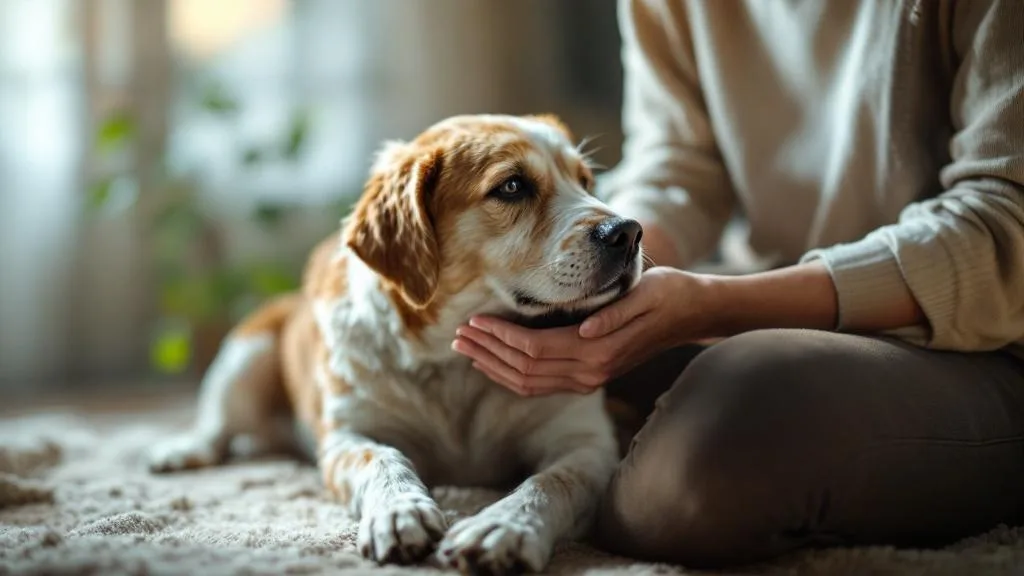
In October of his last year, Cooper’s oncologist used the phrase “comfort-focused care.” It was her gentle way of saying we’d moved past treatment and into something different. His cancer had progressed despite our best efforts. The question was no longer “how do we fight this” — it was “how do we make what time he has left as good as possible.”
I had no idea how to do that. I’d never thought about hospice care for a dog. The next three months taught me more about grief, love, and practical compassion than anything else in my forty-one years.
If you’re facing this with your dog — or if you want to understand what it might look like — this is what I learned.
What Dog Hospice Care Actually Is
Pet hospice — sometimes called palliative care for animals — is a philosophy of care that prioritizes comfort and quality of life over curative treatment. It doesn’t mean giving up. It means choosing to focus on your dog’s experience of the time they have, rather than aggressive interventions that may cause suffering without meaningfully extending life.
Hospice care can take place at home (most commonly), in a veterinary facility, or through dedicated pet hospice services that make house calls. Home hospice is often the best option for dogs because familiar surroundings and the presence of their people are significant sources of comfort. Cooper was a home dog through and through. The idea of him spending his last weeks in a clinic was something I couldn’t accept.
The Hospice Team
You don’t do this alone. Cooper’s hospice care involved:
- His primary vet, who coordinated his pain management and prescription medications
- His oncologist, who I could reach by phone with questions about cancer-specific symptoms
- A veterinary social worker at the oncology practice who checked in with me monthly and provided resources for anticipatory grief
- A mobile vet service that could come to the house for check-ins so Cooper didn’t have to travel when he was struggling
If your vet doesn’t proactively offer a hospice conversation, ask for one. Say: “I want to understand what comfort-focused care looks like for my dog. Can we talk about that?” Not all vets are comfortable initiating this conversation, but most will engage if you bring it up.
Pain Management: The Most Important Part
A dog who is in pain cannot enjoy their remaining time. Pain management is the foundation of everything else. Cooper’s pain protocol in his final months included:
- Gabapentin: A nerve pain medication that was very helpful for his bone discomfort and also had mild sedating effects that reduced his anxiety. This became a cornerstone of his comfort care.
- NSAIDs: Anti-inflammatory medications for joint pain. We were careful here because of his kidney values, and his vet monitored bloodwork closely. Not appropriate for all dogs without monitoring.
- Tramadol: Added as needed for breakthrough pain on harder days.
The hardest part of pain management in dogs is that they don’t tell you when they’re hurting. You learn to read behavioral signs: reluctance to move, changes in posture, reduced appetite, increased panting or vocalization, flinching when touched in certain areas. His vet helped me build a checklist of what to watch for and adjust his medications accordingly.
Setting Up a Comfort Environment
Cooper’s physical environment changed significantly in those last months. I wanted him to be able to access the places that mattered to him — the bedroom, the couch, the sunny spot by the back door — without pain or effort.
The two most important physical additions were:
An orthopedic memory foam dog bed. Cooper had a regular dog bed his whole life, but the memory foam made a visible difference in how he settled and how rested he seemed in the morning. The support matters when a dog is lying down most of the day. I bought a size up from what I thought he needed — the extra space let him reposition without hanging off the edge.
A low-level heating pad designed for pets underneath one section of the bed. Heat is enormously soothing for arthritic joints, and Cooper had significant arthritis alongside his cancer. He would seek out the warm section and sleep more deeply than he had in months. Use only pet-specific heating pads — they maintain safe temperatures that won’t burn a dog who can’t move away easily.
The Quality of Life Assessment
One of the most useful tools his oncologist gave me was the HHHHHMM Quality of Life Scale (developed by veterinary oncologist Dr. Alice Villalobos). It evaluates seven factors on a scale of 1–10: Hurt, Hunger, Hydration, Hygiene, Happiness, Mobility, and More Good Days Than Bad. A score of 35 or above is generally considered acceptable quality of life.
I scored Cooper weekly in his last three months. It gave me something concrete to hold onto when emotion was clouding everything else. Some weeks were better. Some were harder. The trend over time told a story that helped me understand when we were approaching the end.
I’d encourage any owner in this situation to look up the HHHHHMM scale and use it regularly. It doesn’t make the decisions for you, but it grounds the conversation in observable facts about your dog’s experience rather than purely your own grief and hope.
Letting People Say Goodbye
I told people Cooper was in hospice care. Some found it strange that I used that language for a dog. But he’d been part of my life for thirteen years. He’d met everyone I knew. People who’d known him as a puppy deserved the chance to see him one more time if they wanted to.
Those visits were some of the most beautiful days of that hard season. Cooper — even diminished, even tired — perked up when familiar people came through the door. He had this quality until almost the very end: the capacity to recognize and respond to people he loved. Don’t underestimate what those visits mean for both the dog and the people who come.
The Final Days
I won’t describe everything. But I’ll say this: his vet made a house call for his last appointment. He was in his own bed, in his own home, with me next to him. It was peaceful in a way I didn’t think I could survive before it happened and can’t fully describe now.
If you’re approaching this with your dog: you’re doing the most loving thing there is. Comfort over cure. Presence over absence. Honoring the animal they are by making their last days worthy of everything they gave you.
Birch is running circles around the backyard right now as I write this. I hear her. I’m grateful for every day.
Related reading: