
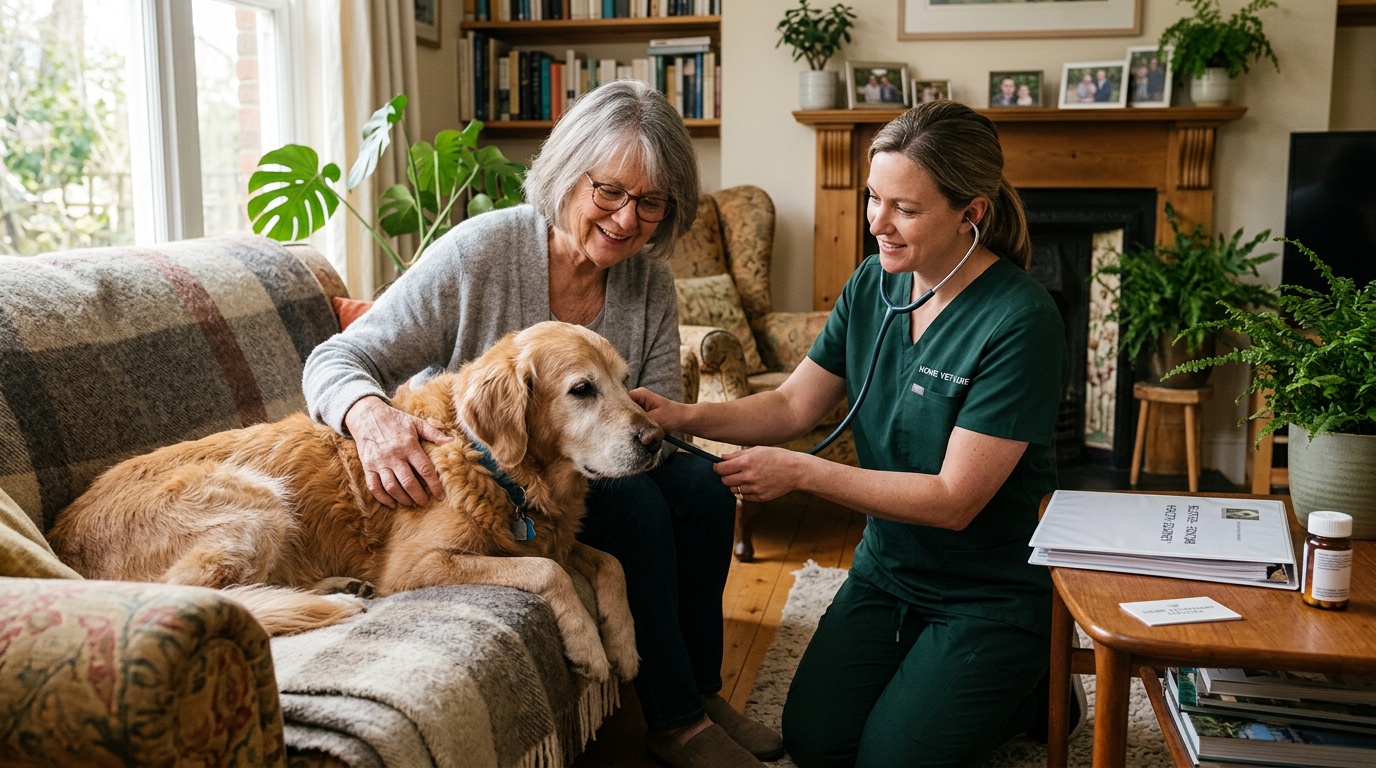
After losing my golden retriever, Cooper, at nine, I became more deliberate about the ordinary appointments that are easy to postpone. I’m a dog mom and researcher, not a veterinarian, and I know a checkup cannot promise us more years. But having a plan beats wondering whether every small change is simply part of getting older.
How often should senior pets see the veterinarian? Most senior dogs and cats should have a wellness examination every six months. Pets with ongoing illness, new symptoms, medication changes, or recent surgery may need appointments much sooner. The American Animal Hospital Association’s senior pet guidance supports twice-yearly examinations even when an older pet seems well.
Think of six months as the routine checkpoint. It is never a reason to wait when something changes. Here is how to build a schedule that fits your pet and make those appointments useful.
1. Start with a six-month schedule, then personalize it
Ask the clinic to put your next wellness visit on the calendar before you leave. Two familiar months, such as March and September, can make the routine easier to remember. Also ask whether any laboratory tests or treatment reviews fall between those visits.
Wellness appointments and follow-up appointments serve different purposes. A visit about an ear infection may focus on that problem; it does not automatically replace a comprehensive senior examination. Ask what was covered and what still needs attention.
| Your pet’s situation | When to arrange care | What to clarify |
|---|---|---|
| Senior and apparently healthy | Usually every six months | Examination schedule and screening plan |
| Living with a chronic condition | At intervals prescribed for that condition | When tests are due and what warrants an earlier visit |
| Starting or changing medication | On the veterinarian’s monitoring schedule | Expected response, possible adverse effects, and recheck date |
| Recovering from surgery | According to the discharge plan | Incision review, pain assessment, and activity clearance |
| Developing a new symptom | Contact the clinic promptly for triage | Whether an examination is needed today or soon |
| Showing emergency signs | Emergency veterinary care immediately | Where to go; call ahead if possible |
There is no single correct extra interval for every pet with arthritis, kidney disease, or heart disease. Stability, treatment, and test results matter. Leave with an actual date or time window rather than a vague instruction to “keep an eye on things.”
2. Know when your pet enters the senior stage
A seventh birthday is a useful conversation starter for many dog owners, but it is not a universal biological boundary. AAHA defines a senior dog as one in roughly the final quarter of its estimated lifespan; cats are generally classified as senior when older than ten. Breed and size influence when a dog reaches that stage. See AAHA’s explanation of senior status.
A large or giant dog may need an aging-care discussion earlier than a small dog. You do not need to calculate an exact lifespan yourself. Ask, “Given my dog’s size, breed, and health history, should we be following a senior care schedule now?”
The label should help you plan, not change how you see your companion. A playful older dog can still benefit from routine assessment. Equally, a younger dog with persistent symptoms needs care even if nobody has called them senior yet.
3. Make the visit about everyday function as well as disease
A useful senior appointment connects the physical examination with life at home. Mention eating, drinking, toileting, sleep, mobility, and behavior. The veterinary team can assess weight and body condition, muscle loss, the mouth, heart and lungs, and other findings alongside that history. AAHA’s guidance on evaluating healthy seniors emphasizes this broader assessment.
“She’s slowing down” is a starting point, but “she pauses before the porch steps and needs help getting up after naps” gives the veterinarian something more specific to investigate. A short video from home can help when your dog moves differently in the clinic.
Bring the three changes that matter most
Write your top concerns before the appointment and mention them at the beginning. If your list is long, tell the receptionist when booking so the clinic can advise on appointment length. Include problems that feel small: chewing on one side, restless nights, or avoiding a previously favorite walk.
I care more about whether a dog can rest comfortably and enjoy an ordinary afternoon than whether a product promises “healthy aging.” That is why I would put a new difficulty getting comfortable near the top of the appointment list.
Ask for goals you can observe. If the veterinarian recommends treatment for a mobility problem, clarify what improvement should look like, when to expect it, and when to report that it is not happening.
4. Understand screening without assuming more is always better
An examination and laboratory screening answer different questions. AAHA’s senior diagnostic recommendations list a complete blood count, chemistry panel, and urinalysis every six to twelve months. The table also includes blood pressure and thyroid assessment, with recommendations varying by species and circumstances. Your veterinarian should tailor the plan.
Ask what each proposed test could change about care. Also ask how current results compare with earlier ones. A trend can provide context that a single laboratory report cannot, while an unexpected result may need confirmation or further investigation.
Routine bloodwork cannot rule out every cancer, explain every limp, or establish that a pet has no pain. Imaging is generally guided by clinical findings, with some breed-specific screening considerations. A reassuring panel should not end the discussion of a symptom you continue to see.
What the evidence means for owners
The six-month recommendation is a clinical guideline, not a guarantee that twice-yearly visits add a specific number of years. The 2023 AAHA senior care guidelines frame care around individualized assessment and quality of life. Earlier recognition can create opportunities to investigate and manage problems, but outcomes depend on the condition.
After Cooper, I am wary of anything that turns early detection into a promise—or suggests an owner could have prevented every loss. The useful question is what information would help us make a better decision for this pet now.
5. Know which changes should bring the visit forward
Contact your veterinary team promptly about new or worsening changes in appetite, thirst, urination, weight, mobility, coughing, sleep, or behavior. Describe when the change began and how your pet is functioning. Marked changes, repeated vomiting, or new pain warrant a same-day call for guidance; the clinic can decide how urgently an examination is needed.
A new lump also deserves a veterinary assessment. Record its location and when you noticed it, and mention growth, bleeding, or discomfort when arranging the visit. Appearance alone cannot establish what it is.
Seek emergency care immediately for serious warning signs
- Difficulty breathing, blue or very pale gums, collapse, or unresponsiveness.
- Repeated attempts to urinate with little or no urine.
- A swollen or painful abdomen, especially with repeated unsuccessful attempts to vomit.
- Uncontrolled bleeding, prolonged or repeated seizures, or suspected poisoning.
- Severe pain or severe, persistent vomiting with weakness.
These examples align with Cornell’s emergency care guidance and are not an exhaustive list. If you are unsure, call a veterinary clinic or emergency hospital. Do not wait to collect a perfect video or finish a symptom diary.
For changes that do not seem urgent, asking for triage is still worthwhile. “Can this wait until the scheduled visit?” is a reasonable question for the veterinary team, especially when your pet already has an illness.
6. Treat surgery follow-up as its own schedule
A senior pet recovering from surgery needs the surgeon’s follow-up plan, regardless of when the last wellness examination happened. Before discharge, get written instructions for medications, activity, incision protection, feeding, and the next appointment. Make sure you know whom to contact overnight.
Many surgical patients have an incision recheck around ten to fourteen days, as described in Texas A&M’s soft tissue surgery guidance. That appointment does not necessarily mean full recovery. The operation, underlying illness, and healing progress determine when normal activity can resume.
The American College of Veterinary Surgeons’ postoperative guide recommends monitoring the incision and following prescribed restrictions. Report worsening swelling, ongoing discharge, foul odor, an opening incision, or concerns about comfort. Keep the surgical site protected as directed even if your pet seems eager to play.
Ask explicitly, “What should improve by tomorrow, and what should make me call?” A personalized recovery milestone is more useful than a general online estimate for how long pets take to recover from surgery.
7. Make the plan manageable between appointments
You do not need elaborate equipment to be a useful observer. A phone note with dated changes and a few short videos is enough to start. Keep the record brief enough that you will actually maintain it.
- Record a baseline: usual appetite, walking routine, sleep, and toileting habits.
- List everything given: prescriptions, preventives, supplements, treats, and food, including amounts.
- Prepare for the appointment: ask whether fasting or a sample is needed; do not change feeding or medication on your own.
- Leave with a written plan: next examination, next tests, treatment goals, and reasons to call sooner.
This article contains an affiliate link. As an Amazon Associate, I earn from qualifying purchases.
If your veterinarian recommends tracking portions, a basic digital kitchen scale with gram measurements can help you record food consistently. An existing kitchen scale works too. Use the veterinarian’s feeding target; measurement does not tell you whether the diet or calorie allowance is appropriate.
When money or appointment stress gets in the way
Tell the clinic your budget before agreeing to a testing plan. Ask for an itemized estimate and which steps are most likely to affect decisions today. If something must be postponed, ask what the risk is and set a date to revisit it. I would protect room in the budget for an examination before buying another supplement marketed for longevity.
For an anxious or painful pet, discuss quieter appointment times, waiting outside until a room is ready, help entering the building, or prescribed medication before the visit. Ask whether any follow-up can appropriately happen by phone or video. Remote updates can help with communication, but the veterinarian must decide when hands-on assessment is necessary.
Frequently asked questions
Is once a year enough if my senior dog seems healthy?
Twice-yearly examinations are the usual senior-care recommendation. Discuss your dog’s individual needs with the veterinarian rather than relying only on how energetic they seem. Agree separately on how often screening tests are appropriate.
Does every six-month visit require a full set of tests?
No. The examination schedule and testing schedule can differ. Recent results, symptoms, known conditions, and medications help determine what is due. Ask what each test is intended to answer.
Should a very old pet still have checkups?
Yes, but the purpose and burden of care deserve discussion. Appointments can focus on comfort, daily function, and support for the family. Tell the veterinarian your priorities and ask which investigations would meaningfully change the care you would choose.
What should I do if we are overdue?
Book the next available senior wellness appointment and mention any symptoms when scheduling. Gather medication details and your main concerns. You do not need a perfect history to restart a useful care routine.