
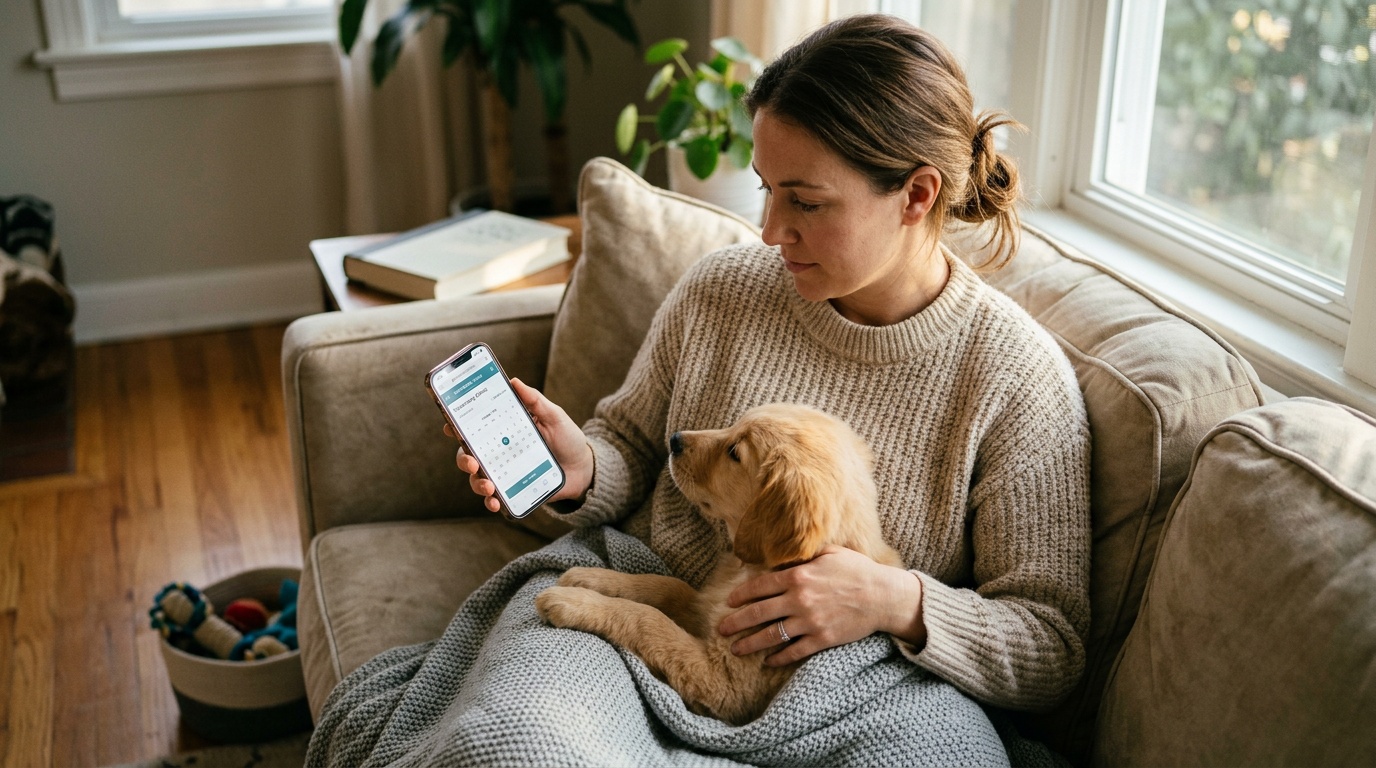
After losing my golden, Cooper, at nine, I became more intentional about the ordinary appointments that are easy to postpone. A first vet visit cannot promise a longer life, but it gives you a starting point: what looks healthy, what needs attention, and when to come back. I?m a dog mom and researcher, not a veterinarian, and that practical foundation matters to me more than any promise of perfect prevention.
When should I schedule my puppy or kitten?s first vet visit? Call before your new pet comes home and aim for an appointment within the first few days, ideally within the first week. The AVMA recommends having a newly acquired dog examined as soon as possible; AAHA specifically recommends a kitten visit within the first week at home. If your pet seems sick, contact a veterinarian sooner. Do not wait for the next vaccine date to arrange an examination. See the AVMA?s guidance on bringing home a dog and AAHA?s kitten care guide.
1. Book around arrival, health, and existing records
There are two different questions here: when a young animal first receives veterinary care, and when your newly adopted pet should see your veterinarian. Those dates may differ. A breeder, shelter, or foster organization may already have arranged examinations, deworming, and vaccines. Your appointment connects that earlier care to a plan you can follow at home.
For a healthy puppy or kitten arriving at eight, ten, or twelve weeks old, call with the arrival date and send the records ahead. Tell the receptionist the pet?s age, where they came from, any symptoms, and the date of the last vaccination. The clinic can decide whether an early examination and the next vaccine can happen together or require separate appointments.
| Your situation | What to do | Why it matters |
|---|---|---|
| Healthy new puppy or kitten | Book before pickup; aim for the first few days to one week at home. | Establish care and review the next steps before dates get missed. |
| Recent shelter or breeder examination | Send the report and ask your clinic to confirm timing. | A recent exam helps, but you still need a continuing care plan. |
| Unknown age, missing records, or found outdoors | Call promptly and explain the uncertainty. | Feeding, infection risk, and preventive care may need earlier attention. |
| Poor appetite, diarrhea, vomiting, or unusual quietness | Contact the clinic the same day for triage. | A routine appointment later in the week may be too late. |
| Breathing trouble, collapse, or suspected poisoning | Seek emergency veterinary help immediately. | These are urgent problems regardless of age or vaccine history. |
Check your adoption or purchase agreement, too. Some require an examination within a specific period. That paperwork deadline is separate from medical urgency. If appointments are scarce, ask about cancellations or another clinic that can provide the initial examination and transfer the records afterward.
2. Know when the first visit cannot wait
A new home can change a pet?s sleep and behavior, but ?probably just settling in? is not a diagnosis. Young animals can become dehydrated and weak with persistent vomiting or diarrhea. AAHA identifies breathing difficulty, unresponsiveness, serious injury, and persistent gastrointestinal symptoms among signs that may require emergency care.
Contact a veterinarian the same day
Call about refusing food, repeated loose stools, vomiting, coughing, eye or nasal discharge, or a pet who seems unusually withdrawn. Explain whether they are drinking, urinating, and responding normally. Mention very young age or small size immediately. A nursing-age puppy or kitten who will not feed needs prompt guidance; do not use an adult pet?s tolerance for missed meals as your benchmark.
Go for emergency care
Seek immediate help for labored breathing, collapse, inability to stand, severe weakness, significant trauma, or suspected toxin ingestion. Repeated vomiting or diarrhea with blood, weakness, or inability to keep water down also warrants urgent assessment. Open-mouth breathing in a kitten is particularly concerning; AAHA treats sustained breathing distress as an emergency.
Call ahead if possible without delaying departure. Mention vomiting, diarrhea, or respiratory symptoms so the clinic can arrange arrival precautions. Do not give human medicines or induce vomiting unless a veterinarian or poison-control professional directs you to; the AVMA?s pet first-aid guidance emphasizes that these steps can cause harm when used incorrectly.
3. Expect an examination, not just vaccinations
The first appointment should help answer three questions: Is this pet healthy today? What prevention is due? What should you watch at home? A physical examination can identify concerns that a vaccination record cannot, although no single exam rules out every developing illness.
For puppies, expect discussion of growth, body condition, food intake, stool quality, behavior, and previous treatment. The veterinarian will typically examine the mouth, eyes, ears, skin, heart, lungs, abdomen, and movement. Ask what they found rather than leaving with only ?everything looks good.? AAHA?s puppy life-stage guidance describes regular examinations and individualized preventive care as part of this early period.
Kitten care includes similar basics, with particular attention to previous parasite treatment, exposure to other cats, and respiratory symptoms. Those are priorities in AAHA?s kitten examination guidance. Ask about feline leukemia virus and feline immunodeficiency virus testing, especially if records are missing. The Feline Veterinary Medical Association recommends testing newly acquired cats; timing, recent exposure, and some kitten results may require follow-up rather than a one-test answer.
I care most about leaving with a clear baseline and a short list of things to notice. Knowing whether appetite, weight gain, or a heart sound needs follow-up is more useful than collecting a stack of unexplained test results.
4. Build a vaccine and parasite plan you can actually follow
?Had first shots? does not mean ?finished with vaccines.? Antibodies inherited from the mother can interfere with early vaccination, and their decline varies between animals. Repeated doses during puppyhood and kittenhood help close that gap. This is why age at the later doses matters, not simply the number of injections on a receipt.
| Care topic | Puppies | Kittens |
|---|---|---|
| Core combination vaccine | Distemper, adenovirus, and parvovirus vaccination generally starts around 6?8 weeks, with doses 2?4 weeks apart through at least 16 weeks. | Panleukopenia, herpesvirus, and calicivirus vaccination commonly starts around 6?8 weeks, with doses every 3?4 weeks through 16?20 weeks. |
| Additional vaccine decisions | Discuss leptospirosis and vaccines related to location, boarding, and exposure. | Discuss feline leukemia vaccination, which is considered core for kittens and young cats. |
| Rabies | Timing depends on local requirements and the vaccine used. | Ask about local requirements even for an indoor kitten. |
| Parasite care | Review stool testing, deworming, and age-appropriate heartworm, flea, and tick prevention. | Review stool testing, deworming, and cat-specific parasite prevention. |
These are planning ranges, not a prescription. Higher-risk puppies may need combination vaccination through 18?20 weeks, and kittens may need an additional core revaccination around six months. Your veterinarian should use the actual records, product, and exposure risk to set dates. The schedules come from AAHA?s canine vaccination recommendations and the AAHA/AAFP feline vaccination guidelines.
Ask the clinic to write down the parasite product, dose, and next due date. As your pet grows, the appropriate weight range can change. Use only products approved for the correct species, age, and weight; never assume a dog product is suitable for a kitten.
5. Bring the details that make the appointment useful
You do not need a perfect binder. A folder of records and a few notes on your phone will usually do. Request the original treatment history rather than relying on a seller?s verbal summary.
- Medical records: Vaccine names and dates, deworming, test results, medications, and any surgery or discharge instructions.
- Food information: A photo of the label, daily amount, meal schedule, treats, and any recent change.
- Home observations: Appetite, energy, stool, urination, and a short video of intermittent coughing or unusual movement, if safely captured.
- A stool sample if requested: Ask how fresh it should be and how to store it before arrival.
- Your three biggest questions: Put the most pressing concern first so it gets time during the visit.
Bring your kitten in a secure carrier and your puppy in an appropriate carrier or on a well-fitted harness and leash. Ask where to wait and whether the puppy should be carried through shared areas. Bring familiar bedding and a little of their usual food for rewards, unless the clinic gives different feeding instructions.
For gentle enrichment while practicing handling at home, an appropriately sized puppy food-stuffable rubber toy can hold some of the usual meal. Supervise use, choose a size that cannot be swallowed, and discard damaged toys. It is optional; quiet practice and ordinary food rewards are enough. As an Amazon Associate, I earn from qualifying purchases.
6. Protect health without putting learning on hold
Ask your veterinarian what safe socialization looks like where you live. Dog parks and heavily used communal toileting areas can create unnecessary exposure for an incompletely vaccinated puppy. At the same time, waiting until every vaccination is finished before introducing any new sights or sounds wastes valuable learning opportunities.
The American Veterinary Society of Animal Behavior supports safe socialization before full vaccination. Its guidance allows well-managed puppy classes as early as seven to eight weeks with at least one vaccine set given seven days beforehand and initial deworming. Your veterinarian and class provider should confirm suitability, particularly during local disease outbreaks.
Start with gentle experiences: watching traffic from your arms, hearing household sounds at low volume, or meeting a calm visitor. Keep sessions short and let the pet retreat. For kittens, reward voluntary carrier entry and brief, comfortable handling. These exercises can make future care easier without requiring contact with unfamiliar animals.
My preference is to spend effort on habits we can maintain: comfortable handling, reliable appointments, and noticing changes. An expensive ?wellness? product cannot replace those basics.
7. Leave with dates, priorities, and a realistic budget
Before you leave, book the next appointment and ask for an estimate of the remaining initial visits. Costs vary by clinic and what your pet needs, so a written estimate is more helpful than a national price range. If money is tight, say so directly and ask which items are urgent, which are routine prevention, and which can reasonably wait.
- Confirm the next vaccine and parasite-prevention dates.
- Ask which changes in eating, stool, breathing, or energy should trigger a call.
- Review growth nutrition and how the clinic will track body condition.
- Discuss microchipping and an individualized spay or neuter plan.
- Save the daytime clinic number and the nearest after-hours emergency option.
If your new pet recently had surgery, bring the discharge instructions and identify who handles the recheck. Recovery restrictions depend on the procedure and the individual pet. A general first-visit schedule should never override the surgeon?s follow-up plan.
Frequently asked questions
Should I wait until my puppy or kitten is eight weeks old?
No, not if they need care earlier. Vaccination starting ages are not a minimum age for examination. Found, orphaned, underweight, or unwell young animals need an earlier assessment and age-appropriate feeding advice.
Do indoor kittens still need a first visit?
Yes. Staying indoors does not establish that a kitten is free of parasites or infection, and it does not remove the need to assess growth, nutrition, and vaccination history. Tell the veterinarian about other animals in the household, too.
What if the breeder or shelter already vaccinated my pet?
Bring the dated records. The veterinarian can determine what counts toward the series and when another dose is due. Avoid both guessing that the series is complete and arranging extra vaccines without reviewing the history.
What if the first available appointment is weeks away?
Call back with the pet?s age, arrival date, symptoms, and next vaccine due date. Request triage and cancellation options, or contact another clinic for an earlier initial visit. Keep monitoring appetite, drinking, elimination, and energy; any concerning change deserves a fresh call rather than waiting for the booked date.