
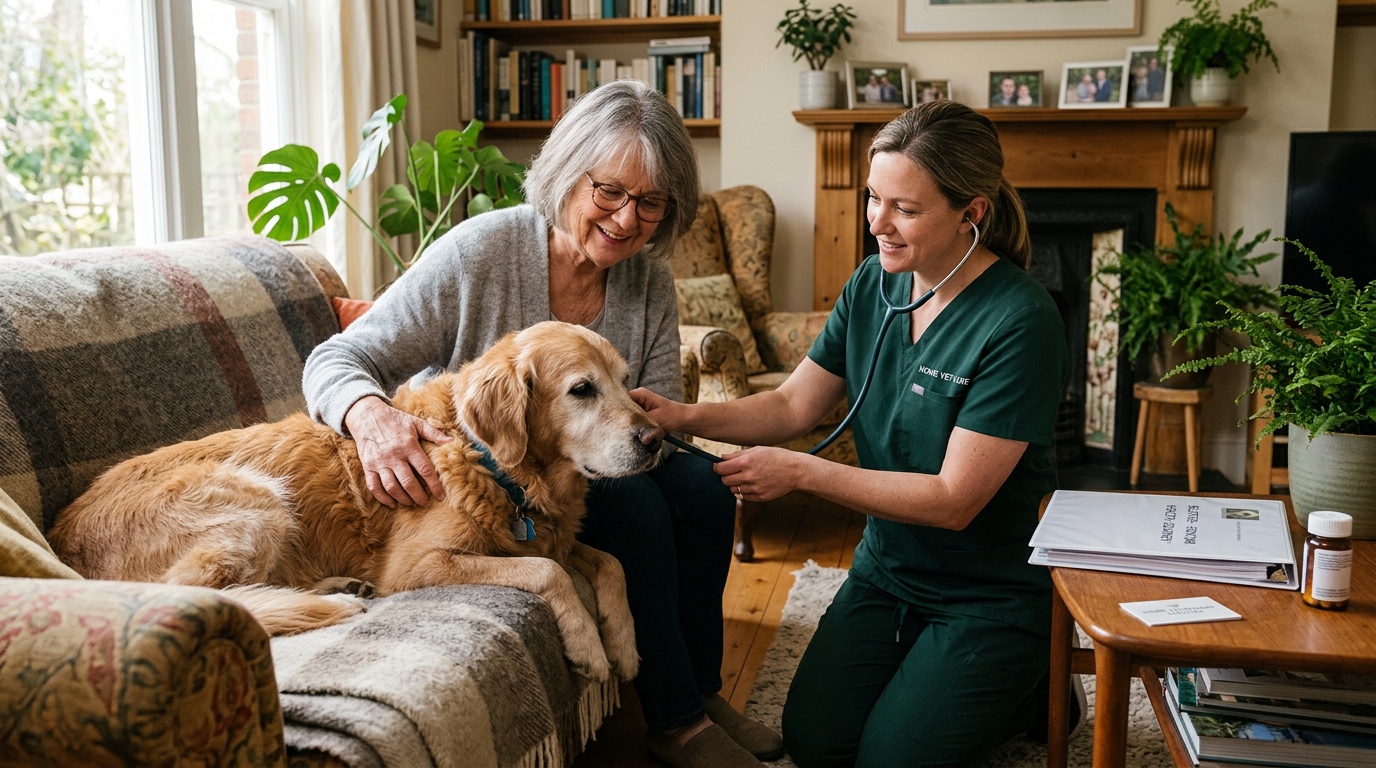
After losing my golden retriever, Cooper, at nine, I became more deliberate about the questions I bring to a vet visit. I want to understand what a checkup can tell us, what it cannot, and what we should do with the information. I?m a dog mom in Portland and a researcher, not a veterinarian, so this guide is about helping you have that conversation.
What is included in a senior wellness exam? Usually, it includes a discussion of changes at home, a nose-to-tail physical examination, weight and body-condition checks, and a review of mobility, oral health, behavior, diet, medications, and preventive care. Bloodwork and urine testing are commonly recommended alongside the exam. Blood pressure and other tests may also be appropriate, but the exact services and fees vary by clinic and by dog.
The most useful outcome is a specific plan: what looks reassuring, what needs investigation, and when to follow up.
1. Know what you are booking?and what is included
A ?senior wellness exam? and a ?senior wellness package? may mean different things. The first can refer to the appointment and physical assessment alone. The second may bundle the visit with laboratory tests. Neither label tells you exactly what you are buying.
Ask for an itemized estimate before the visit. Does it include a complete blood count, chemistry panel, and urinalysis? Are sample collection, blood pressure measurement, or a results consultation separate charges? Will the veterinarian recommend additional tests after examining your dog?
| Part of the visit | What it helps assess | What to clarify |
|---|---|---|
| History and physical exam | Changes at home and findings such as weight loss, discomfort, or a heart murmur | Allow time to discuss your main concerns. |
| Bloodwork and urinalysis | Blood cells, biochemical markers, and urine findings | These may be billed separately from the exam. |
| Blood pressure | Whether pressure needs further assessment | Ask whether it is included or recommended. |
| Parasite testing and prevention | Protection appropriate to exposure and health history | Check which tests and refills are due. |
| Imaging or targeted testing | A particular concern raised by history, examination, or screening | Ask what question the test would answer. |
| Dental treatment | Disease requiring care beyond an awake mouth check | A cleaning or extraction is a separate procedure. |
If money is tight, say so when booking. Ask the veterinarian to separate today?s priorities from reasonable later steps, including the risk of waiting. A budget conversation is part of making a workable care plan.
2. Your observations are part of the examination
The veterinarian needs more than ?she?s slowing down.? Useful details include when a change started, how often it happens, and whether it is getting worse. Compare your dog with their own recent baseline rather than with a younger dog.
The AAHA guidance on evaluating healthy senior pets emphasizes eating, drinking, movement, elimination, behavior, and sensory changes. It also identifies home videos as useful evidence when assessing mobility.
Bring examples such as:
- Eating and drinking: leaving breakfast, dropping kibble, or needing more water refills.
- Movement: taking longer to stand, hesitating at steps, or shortening walks.
- Bathroom habits: accidents, straining, changes in stool, or asking to go out overnight.
- Sleep and behavior: pacing, seeming confused, withdrawing, or becoming unusually irritable.
- Other changes: a new lump, cough, altered breathing, or apparent hearing or vision difficulty.
I would rather bring three specific observations than try to remember every odd moment from the past six months. ?He stopped using the back steps two weeks ago? gives the veterinarian something concrete to investigate.
Behavior changes deserve medical attention, too. Mention nighttime restlessness or accidents without assuming they mean cognitive decline; the veterinarian needs to consider other explanations.
3. The physical exam looks beyond the number on the scale
The veterinarian generally observes your dog?s alertness and movement, listens to the heart and lungs, checks the eyes, ears, skin, and mouth, and feels the abdomen and accessible lymph nodes. They may examine joints and the spine more closely when movement or discomfort is a concern. Findings guide what happens next; the same checklist does not mean every dog needs the same workup.
Weight deserves context. Ask about body condition, which assesses fat coverage, and muscle condition, which assesses muscle loss. A stable scale reading does not necessarily mean body composition is unchanged. Ask the team to compare these findings with earlier visits. VCA?s explanation of canine wellness examinations describes how observation and hands-on assessment fit together.
Make the mouth check count
Tell the veterinarian about bad breath, chewing on one side, food dropping, or reluctance to accept treats. An awake examination can reveal concerns, but it cannot fully evaluate every tooth or the structures below the gumline. Dental radiographs and a complete dental assessment generally require anesthesia; they are not automatically part of the wellness appointment. The AVMA?s pet dental care guidance explains why a visual check alone has limits.
If your dog resists mouth handling, explain that rather than forcing a demonstration. Ask for a dental plan that addresses discomfort and the practicalities of treatment.
4. Bloodwork and urine testing add information you cannot see
For senior dogs, AAHA?s diagnostic testing recommendations list a complete blood count, chemistry panel, and urinalysis every six to twelve months. The right interval depends on your dog?s health, previous results, and medications. An appointment every six months does not automatically mean repeating every available test at each visit.
- Complete blood count, or CBC: evaluates red blood cells, white blood cells, and platelets. Findings can suggest problems such as anemia or inflammation.
- Chemistry panel: measures substances that provide clues about organs and metabolism, including kidney-related markers, liver enzymes, glucose, and electrolytes.
- Urinalysis: evaluates urine concentration and other properties, helping interpret kidney and urinary-tract health alongside blood results.
VCA?s overview of wellness testing explains these complementary roles. Ask whether urine testing is included rather than assuming ?senior bloodwork? covers it.
What screening results actually mean
A flagged number is a finding to interpret, not a diagnosis by itself. Your veterinarian may recommend a repeat sample, a targeted test, or monitoring, depending on the result and the dog in front of them. Previous results help show whether something is changing.
Normal screening also does not rule out every illness. If your dog still seems unwell, tell the clinic even when the laboratory report looks reassuring. AAHA?s guidance for unhealthy senior pets emphasizes interpreting test findings together with clinical signs and other evidence.
I value early detection when it leads to a useful decision. I?m less persuaded by the promise that one large panel can provide certainty or guarantee more years. Ask, ?If this result is abnormal, what would we do next??
5. Additional tests and preventive care should have a purpose
Blood pressure measurement, thyroid testing, urine culture, lump sampling, X-rays, or ultrasound may be discussed. Some clinics include certain tests in their senior packages; others recommend them according to findings. AAHA recommends imaging a relevant area when clinically indicated, rather than treating imaging as a universal requirement for every healthy older dog.
For an additional test, ask three questions: What are we looking for? How would the result change treatment? What are the alternatives if we do not do it today? These questions help distinguish a useful next step from a test whose purpose you do not yet understand.
The visit should also cover vaccinations and parasite protection appropriate to your dog?s history and exposure. Getting older is a reason to review that plan with the veterinarian, not to stop preventive care on your own. AAHA?s senior dog care overview includes these continuing preventive needs.
Bring the actual food name, daily amount, treats, prescriptions, over-the-counter products, and supplements. Photos of labels help. Ask whether the current diet supports your dog?s weight, muscle condition, and medical needs before buying something simply because it says ?senior? or ?longevity.?
6. Prepare for a calmer, more useful appointment
A little preparation helps you spend the visit discussing decisions rather than trying to reconstruct details. Use this checklist:
- Choose your top three concerns. Include dates, frequency, and changes in severity.
- Record a short movement video. Capture ordinary walking or rising from bed without making your dog perform a painful activity.
- Gather records and product labels. Include medications, doses, supplements, and records from other clinics.
- Ask about samples and fasting. Get instructions for urine or stool collection and storage. Do not withhold food or medication unless the clinic directs you to.
- Discuss anxiety and access needs. Mention slippery floors, difficulty getting into the car, or previous stressful visits when booking.
A phone note is enough for tracking meals, bathroom changes, and questions. If the veterinarian asks you to measure food portions by weight, a digital kitchen scale with gram measurements can help you follow that plan consistently. Use the veterinarian?s portion target; the scale does not determine nutritional needs.
As an Amazon Associate, I earn from qualifying purchases.
No purchase is necessary to prepare well. A clear history and an accurate medication list are often the most useful things you can bring.
7. Leave with a plan you can use at home
Before leaving, ask who will contact you with results, when to expect them, and what to do if you have not heard back. Request a copy of the findings and recommendations. If several concerns came up, ask the team to identify the first action rather than trying to change everything at once.
For a mobility concern, that might mean a veterinary treatment plan and a scheduled reassessment. For a weight concern, it might mean a measured feeding plan and a reweigh. The essential detail is how you and the veterinarian will judge whether the plan is helping.
For me, the meaningful goal is comfortable daily life: getting up, enjoying a walk, eating willingly, and resting well. Any discussion about longevity should make room for those ordinary things and for what a family can realistically manage.
Routine wellness care is not the right timeline for every change. Call promptly about new pain, repeated vomiting, or a marked change in eating, drinking, or behavior. Difficulty breathing, collapse, or uncontrolled bleeding needs emergency care; do not wait for a scheduled checkup.
Frequently asked questions
How often should a senior dog have a wellness exam?
Every six months is a common recommendation for senior pets, as outlined in AAHA?s senior pet care advice. Dogs with ongoing illness or medication-monitoring needs may require more frequent visits. Ask your veterinarian when your dog should enter a senior care schedule because size, breed, and individual health matter.
Does a senior wellness exam include cancer screening?
The examination may identify a suspicious lump or another concern, but routine bloodwork is not a comprehensive cancer screen. Ask what any proposed screening test can detect, what it can miss, and how an abnormal result would be investigated.
Is a senior wellness exam the same as a pre-surgery check?
No. Wellness findings can inform surgical planning, but the veterinary team must decide what assessment is needed for the specific procedure and how recent tests must be. A wellness visit also cannot predict recovery time: that depends on the operation, your dog?s condition, complications, and the recovery plan.
What if my older dog seems completely healthy?
That is still a useful time to discuss a baseline and an appropriate screening schedule. Bring your questions, ask which tests would affect care, and leave knowing when to return. You do not need to arrive with a suspected diagnosis to make the appointment worthwhile.