
Is Your Dog in Pain? 12 Silent Signals Most Owners Miss
Cooper never cried. In nine years, I almost never heard him whimper — not when he stepped on something sharp at the beach, not when he bumped his head on the car door, and apparently not when something was growing in his mouth that shouldn’t have been there. He just kept going. Kept wagging his tail at dinnertime. Kept greeting me at the door.
That’s what dogs do. They’re built to hide pain. It’s not stubbornness and it’s not trying to confuse you — it’s a deeply embedded survival response. In the wild, an animal that shows weakness becomes a target. So dogs mask. They compensate. They adapt around pain in ways that look, to the casual eye, like nothing at all.
After losing Cooper, I read everything I could find about how dogs communicate pain. I wanted to understand what I might have missed, and what to watch for with whatever dog came next. When I brought home Birch, I felt like I was finally seeing clearly — knowing what to look for changes what you notice.
Here are 12 signals that dogs in pain commonly display. Some are subtle. Some seem unrelated to pain at all. Most of them are easy to miss if you don’t know they’re there.
Behavioral Changes Around Food
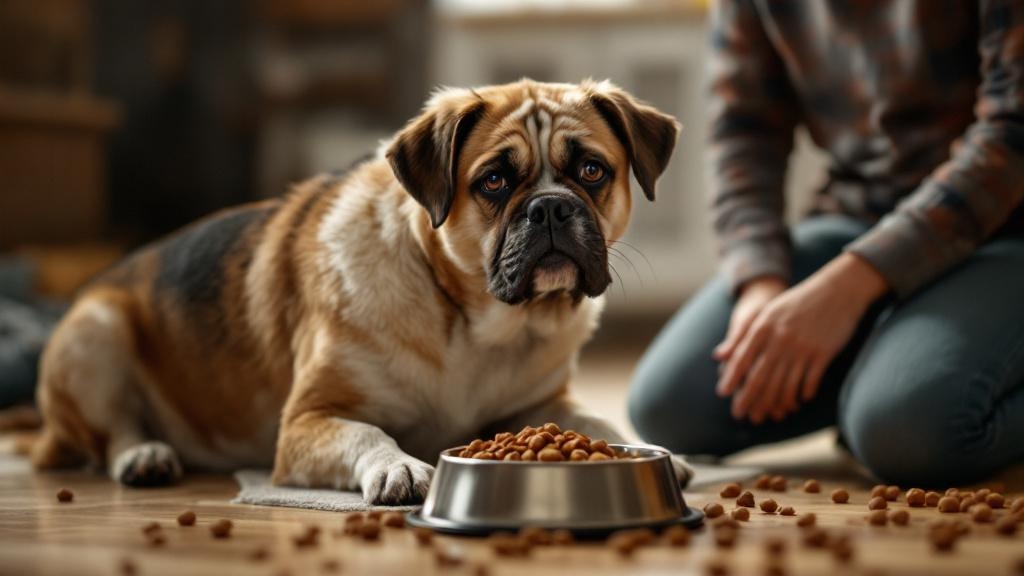
1. Eating Slower or Dropping Food
A dog who suddenly eats more slowly, drops food frequently, chews only on one side of the mouth, or shows hesitation at the food bowl may be experiencing oral pain. This one hit close to home with what I now know about Cooper — it’s also worth knowing that vets often don’t flag oral cancer during routine exams, even when these symptoms are present. Chewing hurts when your mouth hurts, but dogs don’t stop eating — they adapt. They find a way to get the food down while minimizing contact with the painful area.
2. Reluctance Toward Favorite Chews or Toys
If a dog who normally loves to chew on a particular toy suddenly ignores it, or carries toys without chewing them, that’s worth noting. Oral pain, tooth fractures, or jaw pain can all cause this. The dog still wants the toy — they just can’t engage with it the way they used to.
3. Water Intake Changes
Both increased and decreased water intake can signal pain. Dogs in oral pain sometimes drink less because swallowing hurts. Dogs in other kinds of systemic pain or illness may drink more as a symptom of what’s affecting them. Know your dog’s baseline.
Physical Signs
4. Facial Rubbing or Pawing at the Mouth
A dog who repeatedly rubs their face on carpet, furniture, or the ground, or who paws at their muzzle or ears, may be trying to relieve oral, dental, or ear pain. This looks like a grooming behavior from a distance. It’s not.
5. Flinching or Moving Away When Touched
This seems obvious, but it’s easy to rationalize. “She doesn’t like having her back touched — she’s always been that way.” Maybe. Or maybe she didn’t used to mind and something has changed. A dog who consistently moves away from touch in a specific area, or who shows a subtle flinch when you pet a particular spot, is telling you something. Pay attention to where, specifically.
6. Changes in Facial Expression
Dogs in chronic pain often show subtle facial tension that’s easy to miss — a slightly furrowed brow, ears held more tightly back, eyes that seem more narrowed or tense than usual. Researchers have developed pain assessment scales for dogs based on facial expression, and while you don’t need to memorize a scale, knowing that faces carry information is useful. Compare to photos of your dog when they were clearly comfortable.
7. Altered Posture
A dog managing pain often stands or moves differently to compensate. They might carry their head lower than usual, arch their back, shift their weight onto three legs rather than four, or stand in an unusual position. These postural shifts can be so gradual that you don’t notice them building over weeks or months. Again: photos of your dog at different points in time are surprisingly useful for catching this.
Activity and Behavior Changes
8. Decreased Interest in Play
This is one of the first things to go, and one of the first things written off as aging. “He just doesn’t want to play as much anymore.” Sometimes that’s true. But decreased play interest, especially if it develops gradually or in a dog who was recently playful, can indicate pain. A dog in pain still wants to engage — they just hurt when they do.
9. Reluctance to Jump, Climb Stairs, or Get in the Car
Dogs who hesitate before jumping up, who take stairs one at a time instead of bounding, or who stand at the car door waiting to be lifted rather than jumping in — these are classic signs of joint pain or spinal discomfort. The hesitation is the tell. They want to do it. They’re weighing the cost.
10. Sleep Pattern Changes
Sleeping more can mean pain. So can sleeping less, or sleeping in different positions or locations than usual. A dog who always slept curled up and now sleeps only stretched out may be avoiding a position that hurts. A dog who starts sleeping in unusual spots (the cool bathroom floor, a different room) may be seeking relief.
11. Social Withdrawal or Clinginess
Pain changes how dogs want to be around people — but interestingly, it can go in either direction. Some dogs in pain withdraw and want to be left alone. Others become unusually clingy and seek constant reassurance. If your dog’s social preferences shift meaningfully in either direction without an obvious cause, it’s worth considering pain as a factor.
12. Irritability or Aggression (Especially from a Typically Gentle Dog)
A dog who suddenly snaps, growls, or shows aggression — particularly when touched in a specific area — is often a dog in pain. This is one of the most common causes of unexpected aggression in otherwise gentle dogs: something hurts, someone touches it, and the dog reacts. Don’t dismiss this as “bad behavior” without ruling out pain first.
Go to the Vet Immediately If You See:
- Sudden inability to stand, walk, or coordinate movement
- Obvious distress — panting, pacing, unable to settle
- Crying, yelping, or whimpering unprompted
- Distended or very hard abdomen
- Pale, white, or blue gums
- Loss of consciousness or collapse
Monitor (and Call Your Vet Within 24–48 Hours) If You See:
- Any new combination of the 12 signals above
- A change that you can’t explain and that persists
- Any lump, swelling, or lesion that’s new
Tools That Help
If your dog is showing signs of joint or mobility pain, an orthopedic dog bed with memory foam can reduce pressure on painful joints during rest — it won’t fix the underlying issue, but it can meaningfully improve your dog’s quality of life while you work with your vet on treatment. There are also formal dog pain assessment guides that walk through behavioral scoring systems vets use — worth reading if you want to get more systematic about what you’re observing.
Trust Your Gut
The most important thing I can tell you: you know your dog. If something feels different, it probably is different. Vets appreciate owners who come in saying “I can’t point to exactly what’s wrong, but something has changed” — that’s useful clinical information. You’re not overreacting. You’re paying attention.
I spent too long attributing Cooper’s subtle changes to aging and personality. I’m not going to make that mistake with Birch. If something shifts, I notice it. I write it down. I bring it up. It’s the least I can do for a dog who would never tell me directly that something hurts.