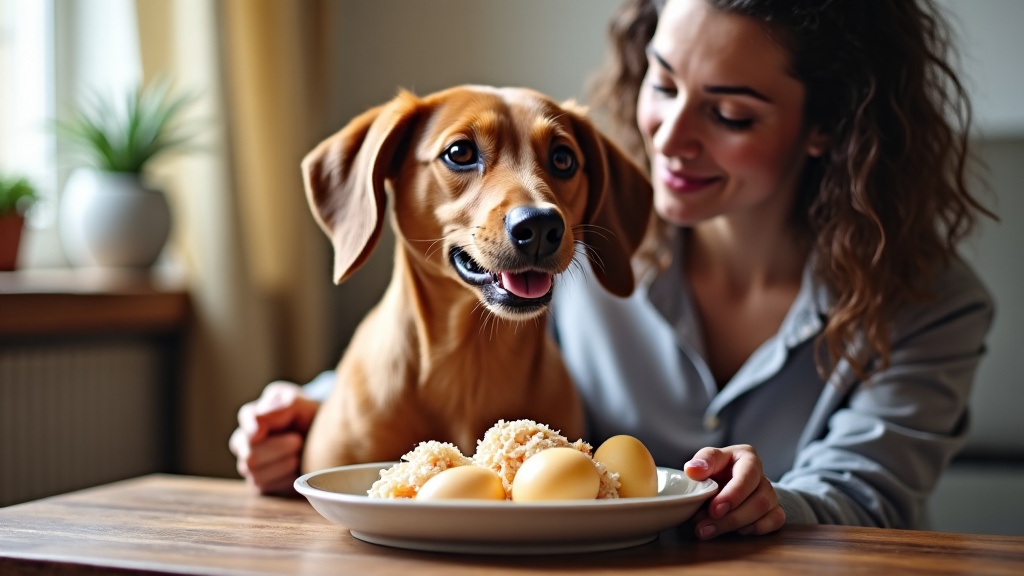
I wouldn’t treat eggs as a magic food for weight gain, but yes, they can make a dog gain weight if you add them on top of their usual meals often enough. A plain large egg has roughly 70 calories, plus protein and fat. For some dogs, especially active dogs or seniors who need a little encouragement to eat, that can be useful. For others, it is just extra calories that quietly push them into weight gain.
That distinction matters more than most dog-feeding advice online admits. After losing Cooper at nine, I pay much closer attention to the small, ordinary decisions that shape a dog’s long-term health. Weight is one of them. Being too thin can weaken an older dog fast, but carrying extra fat can also worsen arthritis, breathing issues, insulin resistance, and overall longevity.
So when readers ask me, “Will eggs make my dog gain weight?” my honest answer is: they might, depending on your dog’s size, current body condition, total calories, and how the eggs are prepared. Used deliberately, eggs can help. Used casually, they can become one more high-calorie extra that tips the scale in the wrong direction.
Fast answer: when eggs help and when they hurt
If your dog is already at a healthy weight and you start adding eggs every day without reducing anything else, weight gain becomes more likely. If your dog is underweight, recovering from illness, or eating poorly, a small amount of cooked egg can be a practical topper that adds calories and makes food more appealing.
What matters most is not whether eggs are “good” or “bad.” It is whether they fit your dog’s calorie budget and medical picture. I care much less about food trends than I do about whether a dog is maintaining muscle, staying mobile, and keeping a stable body condition over time.
Why eggs can lead to weight gain
Eggs are nutrient-dense. They provide complete protein, fat, B vitamins, selenium, and choline. That is useful nutrition, but calories still count. For a 12-pound senior dog who only needs a few hundred calories a day, one whole egg is a meaningful addition. For a 75-pound active dog, it is a much smaller percentage of the day’s intake.
Here is the practical issue I see over and over: owners think in ingredients, but the body responds to total energy intake. An egg feels wholesome, so it doesn’t register the same way a biscuit or table scrap does. But if your dog is getting an egg, a dental chew, and a few extra bites at dinner, those “little” additions can add up quickly.
Preparation matters too. A plain cooked egg is one thing. Scrambling it in butter or oil adds more calories. Mixing it with cheese adds even more. That may be appropriate if your vet is actively trying to put weight on a frail senior dog. It is not a neutral snack for the average couch-loving dog who already struggles to stay lean.
How much does the preparation change things?
| Egg option | Approximate calories | When it may make sense | Main caution |
|---|---|---|---|
| Plain boiled or poached egg | About 70 | Best all-purpose option for most dogs | Still counts as extra calories |
| Plain scrambled egg | About 70 to 80 | Good for picky eaters if cooked without extras | Easy to over-serve because it looks small |
| Scrambled with butter or oil | 90 to 130 or more | Sometimes useful for intentional weight gain | Can trigger GI upset or unwanted weight gain |
| Egg mixed with cheese | 110 to 180 or more | Short-term appetite boost for some underweight dogs | High fat, high calorie, not ideal for pancreatitis-prone dogs |
| Raw egg | About 70 | Usually not worth the risk | Bacterial risk and no clear advantage over cooked |
What this means: if you want to use eggs, keep them simple. Plain cooked egg gives you the benefit without quietly turning into a calorie bomb.
When eggs can be genuinely helpful
There are situations where I do think eggs are a reasonable tool. One is an older dog who is eating less and needs a little encouragement. Another is a dog who is slightly underweight and needs modest calorie support while you and your vet figure out the bigger reason behind the weight change. Eggs are soft, easy to chew, easy to digest for many dogs, and usually highly palatable.
For senior dogs especially, the bigger goal is often not just “gain weight,” but maintain muscle without overloading fat calories. That is an important difference. A dog can gain weight from extra fat and still lose muscle at the same time, which is not the outcome you want in an aging body. Eggs can help add protein, but they should be part of a broader plan that includes a complete, balanced diet and regular weight checks.
If your senior dog is dropping weight unexpectedly, I would not stop at adding eggs and hoping for the best. Unplanned weight loss in older dogs can point to dental pain, kidney disease, GI disease, diabetes, thyroid issues, cancer, or simple appetite decline from nausea or discomfort. Early detection matters here. By the time weight loss is obvious through the coat, you can already be behind.
That is one of the hardest lessons I took from Cooper. I’m much quicker now to treat appetite changes and subtle body-condition shifts as a reason to look closer, not just feed more treats.
How much egg is reasonable for a dog?
There is no single perfect number, because calorie needs vary so much by size, age, activity, and medical conditions. But as a practical starting point, I like to think of eggs as a topper, not the main event.
- Small dogs under 20 pounds: often 1 to 2 teaspoons up to about 1/4 egg at a time is enough.
- Medium dogs 20 to 50 pounds: about 1/4 to 1/2 egg is often reasonable.
- Large dogs over 50 pounds: 1/2 to 1 whole egg can fit more easily, depending on the rest of the diet.
If you are feeding egg daily, it should usually replace some calories elsewhere rather than stacking on top of a full ration. A useful rule of thumb is to keep extras and treats to around 10% of daily calories unless your veterinarian has given you a different therapeutic plan.
For dogs who truly need weight gain, I would rather see a measured plan than random extras. That may mean slightly larger meals, a more calorie-dense senior food, a fresh-food topper, or a veterinary recovery diet. Category-level options on Amazon can be a starting point if you need ideas for senior dog food toppers or high-calorie senior dog food, but I would still choose based on your dog’s health status, not just calorie density.
When eggs are the wrong tool
Eggs are not the best choice for every dog. I would be cautious or skip them entirely in a few situations:
- Pancreatitis history: eggs contain fat, and richer preparations can be a bad idea.
- Dogs on strict prescription diets: even wholesome extras can undermine a therapeutic diet for kidney disease, liver disease, food allergy trials, or urinary issues.
- Obesity or arthritis: extra calories may worsen the bigger problem.
- GI sensitivity: some dogs get loose stool from eggs, especially if introduced too fast.
- Confirmed egg allergy: uncommon, but it happens.
If your dog is a senior with mobility issues, this tradeoff becomes especially important. A few extra pounds may not sound dramatic to us, but on aging joints it can matter a lot. For many older dogs, preserving a lean frame is one of the most evidence-backed things owners can do to support comfort and healthy years.
If your senior dog needs to gain weight, do this instead of guessing
When a senior dog needs weight gain, my bias is toward a simple, trackable plan. Eggs can be one small part of that plan, but they should not be the entire strategy.
1. Confirm whether your dog is actually underweight
Many owners are surprised by this. We sometimes normalize roundness in adult dogs, so a truly ideal body condition can look “too skinny” at first. Ask your vet for a body condition score and muscle condition score. That gives you a real baseline.
2. Weigh weekly, not emotionally
What you want is trend data. If your dog is losing or gaining, numbers tell you sooner than your eyes will. If you need a practical way to track at home, a pet scale for dogs can help with small and medium dogs, and for larger dogs even consistent human-scale methods are better than guessing.
3. Improve the core diet first
Before adding a lot of extras, look at the main food. Is it calorie-dense enough? Is your dog finishing it happily? Is it appropriate for senior health needs? Some dogs do better with fresh or gently cooked food because the smell, texture, and moisture improve intake. Others simply need a more digestible senior formula.
4. Use add-ons with a purpose
Eggs, canned food, bone broth made for dogs, and fish oil can all play a role. I am especially careful to choose add-ons that either increase intake safely or support something else meaningful, like inflammation control. For dogs who may benefit from omega-3 support alongside weight maintenance, browsing a well-labeled omega-3 supplement for dogs category can be useful.
5. Get veterinary help early if the change is unexplained
If your senior dog is losing weight without an obvious reason, eating less for more than a few days, vomiting, drinking more, having diarrhea, or acting different, I would book the visit. Weight change is often a symptom, not the whole story.
Best ways to serve eggs safely
- Cook them fully. Boiled, poached, or plain scrambled is easiest.
- Skip salt, butter, onions, garlic, and seasoning blends.
- Start small and watch stool quality for 24 to 48 hours.
- Use eggs as a topper or occasional add-in, not a replacement for balanced dog food.
- If your dog is on a prescription diet, ask your vet before adding anything regularly.
I tend to prefer plain scrambled or chopped hard-boiled egg mixed into a normal meal. It is simple, measurable, and easy to repeat consistently. Consistency matters a lot more than wellness-marketing drama.
FAQ: Will eggs make my dog gain weight?
Can I give my dog an egg every day?
Some dogs can tolerate that, but daily eggs only make sense if they fit the total calorie plan. For many dogs, especially small or less active ones, daily eggs would be too much unless you reduce calories elsewhere.
Are eggs good for underweight senior dogs?
They can help as a palatable, protein-rich topper, but they are not a complete weight-gain plan. If a senior dog is underweight, I would want to know why and make sure the core diet is doing most of the work.
Will scrambled eggs make a dog gain weight faster than boiled eggs?
Only if you add extra fat like butter or oil. A plain scrambled egg and a boiled egg are fairly similar nutritionally.
Can eggs help a picky dog eat?
Yes, often. The smell and texture make them useful for tempting a dog to finish a meal. That can be valuable for seniors with lower appetite, but if appetite loss is new or persistent, I would still involve your vet.
Are raw eggs better for dogs?
I don’t think so. Cooked eggs are safer and still highly nutritious. Raw eggs add bacterial risk without giving you a clear practical advantage.
The bottom line
Eggs can make a dog gain weight, but they do not automatically do so. They are simply one calorie-containing food in the bigger picture of your dog’s daily intake, body condition, and health status. For a healthy dog, an occasional plain cooked egg is usually fine. For an underweight senior, eggs may be a helpful topper. For an overweight or medically fragile dog, they may be the wrong add-on.
If you remember one thing, let it be this: use eggs intentionally, not casually. Measure them, keep the preparation plain, and pay attention to the trend in your dog’s weight and muscle. That is the kind of quiet, boring vigilance that actually protects dogs over time.
For related guidance, you may also want to read best dog food for senior dogs and whether fresh food helps senior dogs live longer.