
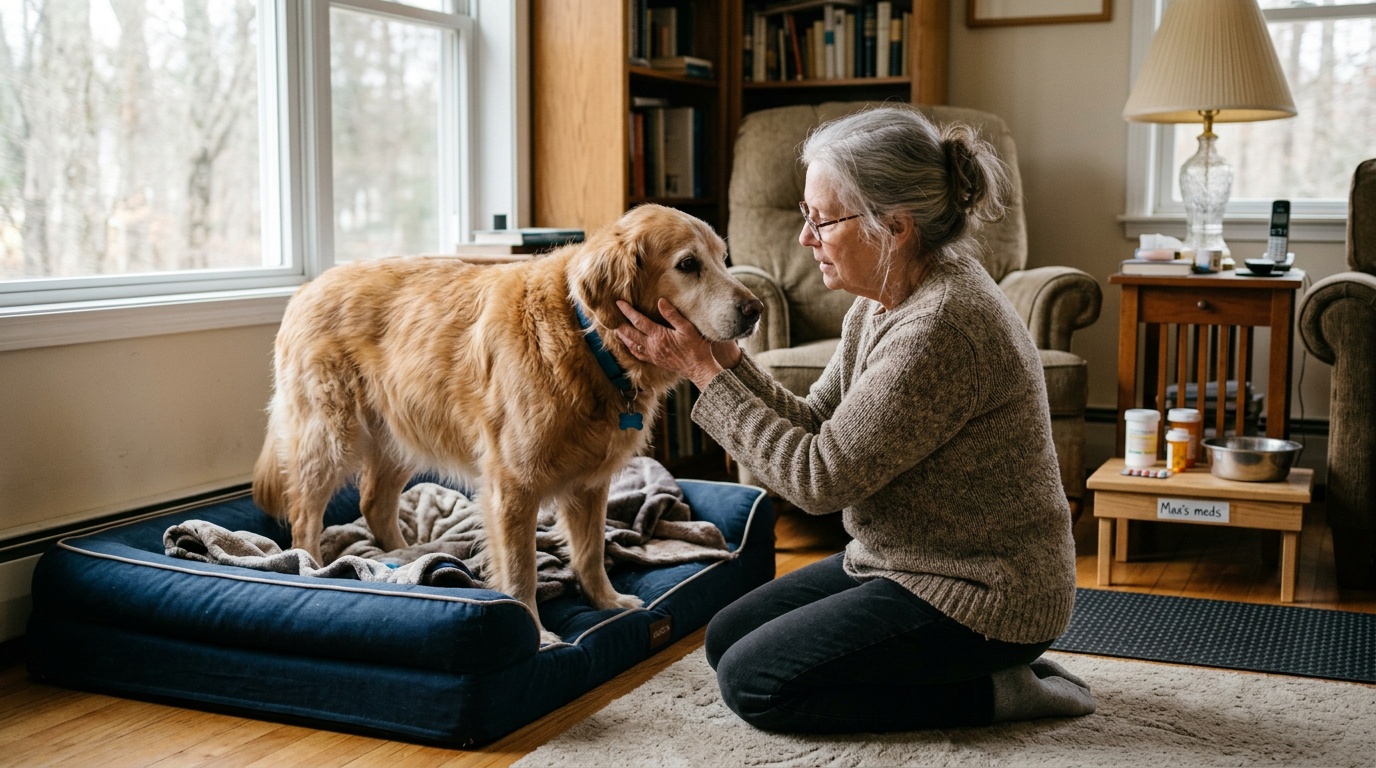
When I lost my golden retriever, Cooper, at nine, I became much less willing to brush off changes in a dog as ?just getting older.? That loss is why I research senior dog health so carefully. I?m a dog mom and researcher, not a veterinarian, and I know how much owners need a workable next step when their dog starts seeming lost in a familiar room.
How to care for a dog with dementia starts with a veterinary assessment, a predictable routine, a safer home, and gentle activities your dog can still enjoy. Treatment may also include prescription medication and targeted nutrition. The aim is more comfortable, connected time together; there is currently no cure for canine cognitive dysfunction.
For today: block unsafe stairs, keep water and bedding easy to reach, offer an extra potty break, and record the changes you?re seeing. If confusion appeared suddenly, contact a veterinarian promptly instead of assuming dementia.
This article contains affiliate links. As an Amazon Associate, I earn from qualifying purchases.
1. Get new symptoms checked before calling them dementia
Dog dementia, usually called canine cognitive dysfunction syndrome or CDS, is a progressive condition affecting an aging dog?s brain and behavior. It can change how a dog navigates, sleeps, interacts, and remembers familiar routines. But recognizing those changes is only the beginning of diagnosis.
According to Cornell?s guide to cognitive dysfunction, a veterinarian assesses clinical signs and checks for other explanations, including pain, systemic illness, and hearing or vision loss. Bloodwork and urine testing may be recommended, with additional investigation when needed. A dog can also have dementia and another treatable problem at the same time.
I would rather bring a short list of ?small? changes to an appointment than wait until every night becomes difficult. Early assessment can uncover something treatable and gives you a baseline for judging whether care is helping.
What to record before the appointment
Veterinarians often organize symptoms using DISHAA: disorientation, interaction changes, sleep changes, house-soiling, activity changes, and anxiety. These are observation categories, not a home diagnostic test. AAHA?s senior care guidelines explain why tracking these patterns helps with assessment and follow-up.
| Change you notice | Useful detail to bring your vet |
|---|---|
| Getting stuck or seeming lost | Where it happens, how often, and a short video if safe |
| Different social behavior | Withdrawal, clinginess, startling, or new irritability |
| Night waking | When it starts, how long it lasts, and what helps |
| Indoor accidents | Urine or stool, timing, and changes in thirst or urgency |
| Pacing or reduced engagement | Whether your dog can settle or enjoy familiar activities |
| New anxiety | Triggers, body language, and response to reassurance |
Do not wait for a routine dementia appointment if your dog suddenly becomes confused, collapses, has a seizure, cannot stand, or has trouble breathing. Contact an emergency veterinarian. A sudden change needs its own assessment, even in a dog already diagnosed with CDS.
2. Make home easier to navigate
Think about the routes your dog uses repeatedly: bed to water, bed to door, and resting spot to family. Keep those routes short, clear, and consistent. Leave furniture and bowls in familiar positions, and remove clutter rather than redesigning the entire room.
Cornell?s senior dog dementia advice recommends blocking stairs and spaces where a dog could become trapped, such as behind a couch. A supportive, well-padded bed and attention to nails and paw hair can also help an older dog manage daily life.
- Prevent falls: Secure barriers at stairs and restrict access to pools, balconies, and other drop-offs.
- Improve footing: Use secured nonslip runners along frequently traveled routes.
- Keep essentials accessible: Put water and a comfortable bed on the floor your dog uses most.
- Reduce startling: Approach where your dog can see you and speak gently before touching them.
- Supervise outside: Use a leash or a secure enclosed area, and keep identification current.
A smaller familiar area can be easier to manage, but watch your dog?s response. If a gate causes frantic pacing, adjust the setup and discuss the distress with your vet. A crate is only useful if your dog already finds it comfortable and continues to settle there.
For owners who need to understand what happens during brief absences, an indoor pet camera with night vision may help document pacing or disrupted sleep. It is an observation tool; a dog who repeatedly gets trapped or panics needs a different supervision plan.
3. Build a predictable day and a calmer night
A consistent routine and appropriately gentle mental and physical activity are central parts of management in the Merck Veterinary Manual?s guidance on cognitive dysfunction. Predictability reduces how much your dog must figure out. Choose a routine your household can repeat without turning every hour into an appointment.
A simple daily pattern
- Morning: Potty trip, breakfast, prescribed medication as directed, and a short daylight sniff walk if comfortable.
- Midday: Rest, another toilet opportunity, and a few minutes of easy interaction.
- Evening: Dinner at a familiar time, gentle activity, and a quieter household as bedtime approaches.
- Bedtime: Final potty trip and the same easy-to-reach sleeping place.
Adjust this pattern around mobility, weather, medications, and your dog?s usual preferences. Protect naps, too. Keeping a senior dog awake all day to force nighttime sleep can leave everyone more distressed.
When your dog paces or cries at night
First check immediate needs: a toilet break, access to water, a comfortable temperature, and whether your dog appears painful or stuck. Guide them calmly toward their resting area. A dim night-light is a reasonable trial if darkness seems to make navigation harder; watch whether it actually helps.
Record repeated episodes and contact your vet, especially if your dog pants, cannot get comfortable, or seems frightened. Nighttime restlessness may have several contributors. Do not assume every episode is ?sundowning,? and do not give human sleep aids or start melatonin without veterinary guidance.
Agree on a nighttime plan with anyone sharing care: who responds, what to check, and when to call for help. Exhaustion makes even a loving household less able to cope, so asking for practical backup belongs in the care plan.
4. Handle accidents and enrichment without pressure
Treat accidents as information. Add toilet opportunities after waking, after meals, and before bed, then adjust according to your notes. Escort your dog to the same accessible spot and allow enough time. Punishment cannot resolve confusion and may make toileting more stressful.
Keep washable bedding available and clean accidents thoroughly. If diapers are necessary, check and change them frequently, clean and dry the skin, and provide regular diaper-free breaks. New accidents, straining, or increased drinking still deserve veterinary attention. Do not restrict water to reduce cleanup.
Make activities easy enough to succeed
The goal of enrichment is pleasant engagement. Offer a familiar cue with a reward, a short sniffing outing, or a few pieces of your dog?s normal food placed in plain sight. Stop while your dog is comfortable. Walking away, repeated failure, or agitation means the task needs to be easier or shorter.
A beginner dog food puzzle with large pieces can be useful for a dog who still enjoys searching for food. Start with the food exposed, supervise use, and avoid detachable parts your dog might swallow. An ordinary shallow dish may be the better option on a difficult day.
I care more about whether a dog enjoys those three minutes than whether a toy is marketed as ?brain training.? There is no need to make an aging dog pass a daily memory test.
5. Discuss medication and nutrition with realistic expectations
Prescription treatment needs a complete medication review
Selegiline is approved for canine cognitive dysfunction in North America. It may improve symptoms, but response varies. Cornell notes that improvement can take several weeks. Ask your vet what changes to watch for, when to reassess, and what side effects should prompt a call.
Bring a complete list of prescriptions, over-the-counter products, supplements, and flea or tick treatments. AAHA warns that selegiline can interact with other medications, including certain antidepressants and pain medicines. Your vet must coordinate any anxiety or sleep treatment; do not add products or change doses yourself.
What the diet research actually means
A 90-day randomized diet study involving 87 dogs tested diets containing medium-chain triglycerides, or MCTs, plus a nutrient blend. Dogs in the 6.5% MCT group improved across all six assessed behavior categories, while the control group improved in four. That is encouraging evidence for a formulated diet, but it does not establish a cure or longer survival.
The study relied on owner-reported behavior and involved pet-food-industry researchers. Those details matter when interpreting the findings. It also tested a complete formulation, so the results cannot simply be applied to a spoonful of coconut oil or an unrelated ?brain? chew.
Ask your vet whether a therapeutic cognitive-support diet fits your dog?s other conditions, appetite, and budget. Existing kidney disease or a history of pancreatitis may change the nutritional priorities. Request a transition plan and monitor appetite, stool, and weight.
My spending priority would be the examination and an achievable treatment plan before a basket of supplements. AAHA describes the research behind many supplements as limited. If your vet recommends one, agree on the product, the target symptom, and a review date before buying it.
6. Track comfort and plan for changing needs
Use a notebook or phone note to record sleep, accidents, appetite, distress, mobility, and one activity your dog enjoyed. Mark treatment changes so you can compare patterns across days. Ask your vet whether a standardized cognitive questionnaire would help at follow-ups.
Choose concrete goals: fewer prolonged pacing episodes, easier settling after a potty trip, or renewed interest in breakfast. A vague feeling that things are ?better? is harder to act on than a pattern you and your vet can review.
AAHA?s quality-of-life guidance considers comfort, function, and overall well-being. Eating is only one part of that picture. Also consider whether your dog can rest, move safely, enjoy contact, and spend meaningful time free from fear.
If distress persists despite treatment, arrange a quality-of-life conversation. Ask what remains treatable, whether palliative care could help, and what signs would make euthanasia a compassionate option. You do not have to wait for a crisis to discuss this. After losing Cooper, I value comfortable time together more than any promise of extra time on a calendar.
Frequently asked questions about dog dementia care
Can a dog with dementia still be happy?
Yes, a dog may still enjoy food, sniffing, affection, and familiar company. Look at your own dog?s experience across the day. Persistent fear or inability to settle needs attention, even if there are still occasional good moments.
How long can a dog live with dementia?
There is no dependable countdown for an individual dog. Severity, other illnesses, and response to care affect the outlook. Ask your veterinarian about your dog?s likely course and reassess comfort regularly rather than relying on an online lifespan estimate.
Can I leave my dog with dementia alone?
That depends on safety and distress. Start with brief, observed absences in a familiar area. If your dog panics, falls, or becomes trapped, arrange supervision and discuss treatment. A camera can show a problem but cannot provide hands-on help.
What should I do first tonight?
Clear the route between bed, water, and the door; block hazards; offer a calm potty trip; and write down what happens overnight. Book a veterinary assessment for ongoing changes. Sudden confusion or severe distress warrants prompt veterinary contact.